Truck-mounted pumping, extraction and drying across Tulsa County
Emergency Water Extraction Tulsa OK, 24 Hours a Day
Emergency Water Extraction Tulsa OK starts with a phone call and ends with a dry floor. Our crews pull standing water out of basements, crawlspaces and slab homes across Tulsa County, then dry the structure so mold never gets a foothold. Whether a pipe burst at 2 a.m. or a storm pushed water through your foundation, we answer, we roll, and we extract.
Live dispatcherUpfront optionsBacked workmanship
What's included
What Our Emergency Water Extraction Service Includes
Every extraction call includes the full package below. We do not nickel-and-dime you for moisture readings or documentation, because those are part of doing the job right. If a job needs something beyond this list, we tell you before we start and price it separately.
Full Moisture Inspection
Thermal imaging camera and Protimeter pin and pinless moisture meter readings on every affected wall, floor and baseboard. We map the wet zone and show you the numbers, so you know exactly what we are treating and why.
Standing Water Pumping
Submersible pumps clear deep water in basements, crawlspaces and garages. We run drainage pipe to a safe discharge point and monitor the level until the pump starts pulling air instead of water.
Carpet and Pad Extraction
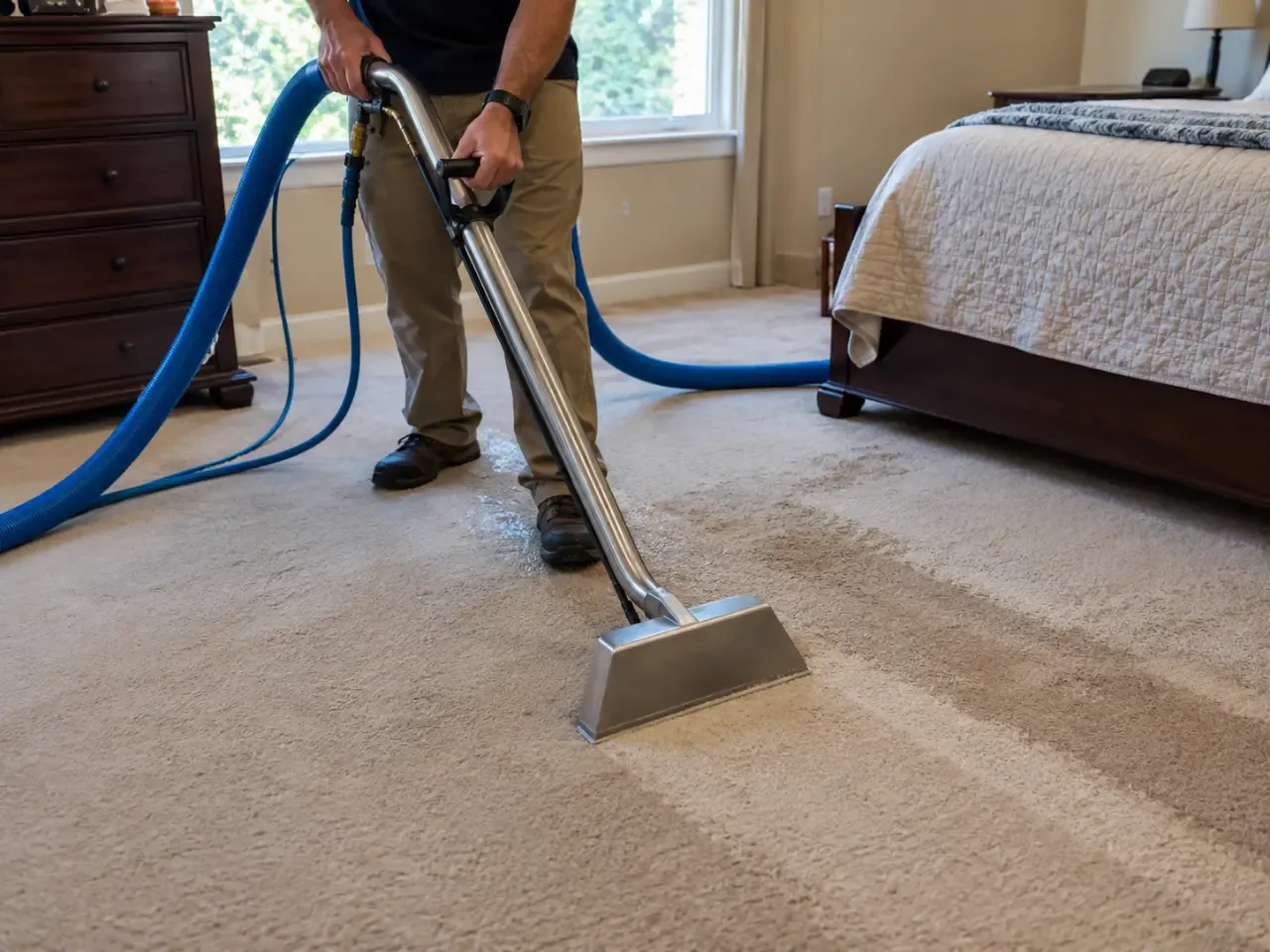
Truck-mounted water extraction unit and portable carpet extractor work together to pull water from carpet fibers and padding. Pad that has been saturated more than 48 hours usually gets removed and replaced rather than dried in place.
Structural Drying Setup
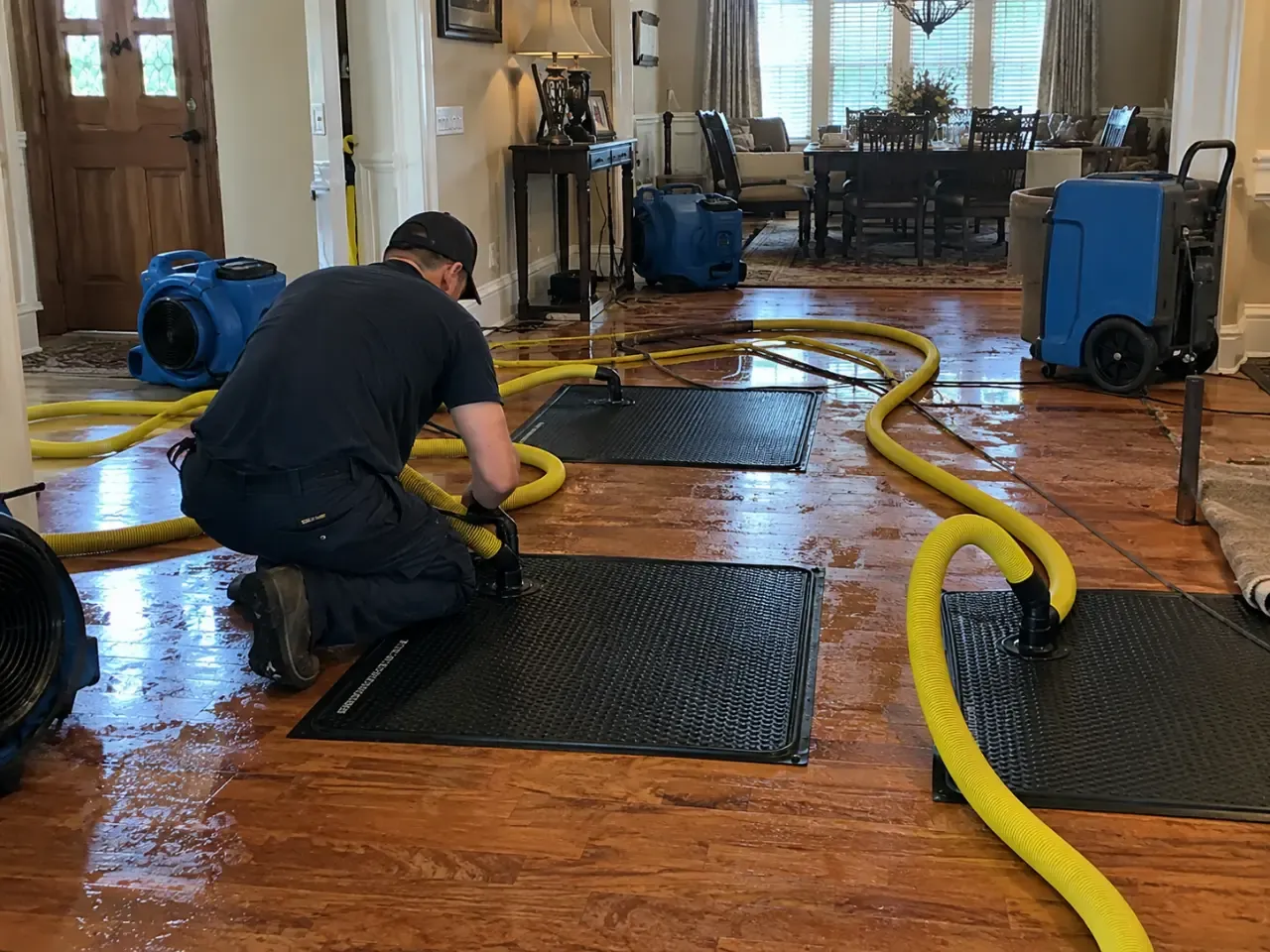
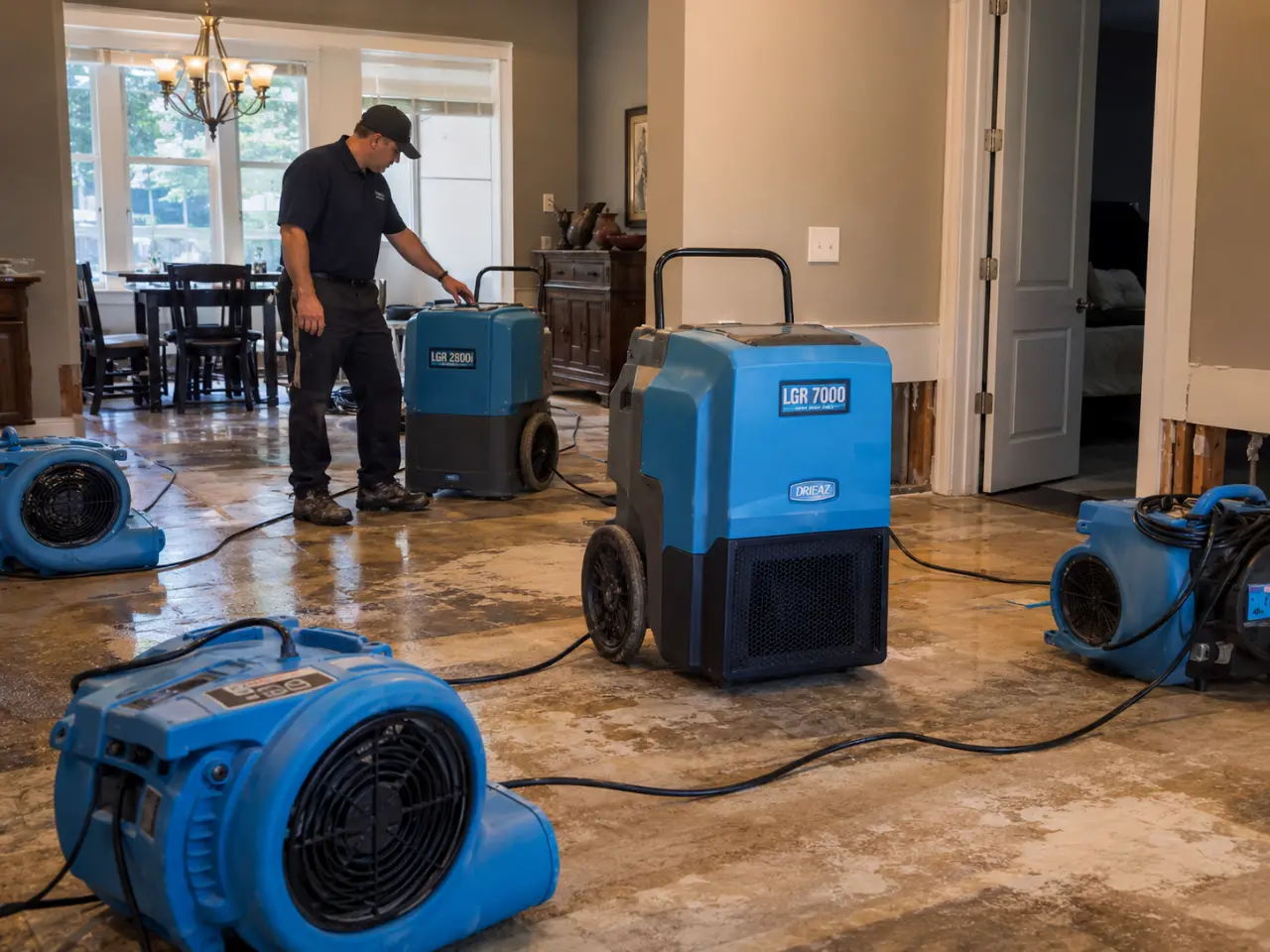
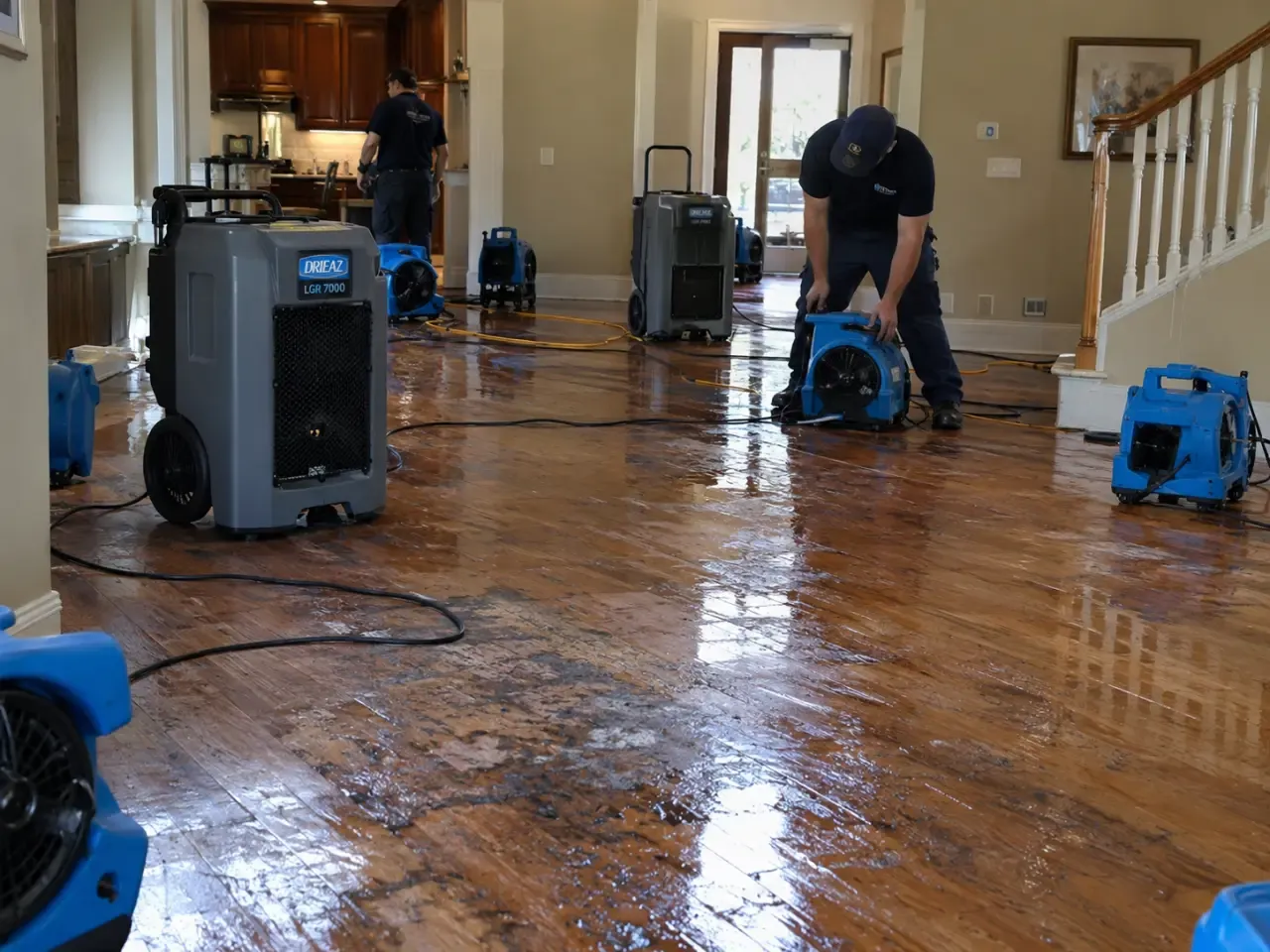
LGR dehumidifiers and air movers placed according to the moisture map, with daily monitoring using a hygrometer and infrared thermometer. We adjust placement as the structure dries and log every reading.
Antimicrobial Treatment
Antimicrobial disinfectant applied to affected framing, subflooring and wall cavities after extraction. This is standard on every job and required on category 2 and category 3 losses like appliance leaks and sewage backups.
Insurance Documentation
Photos before, during and after, room-by-room moisture logs, and a written drying summary. We hand you the file when we pull equipment so your claim does not stall waiting on paperwork.
Service overview
What Emergency Water Extraction Tulsa OK Really Involves
Emergency Water Extraction Tulsa OK is the physical removal of standing water from a structure using pumps, extractors and negative air pressure, performed within hours of a leak, storm or backup. We start with a thermal imaging camera and pin and pinless moisture meters to map exactly how far the water traveled, because water wicks up drywall and creeps under subflooring faster than most homeowners expect. Then a truck-mounted water extraction unit pulls hundreds of gallons in a single pass, and portable carpet extractor units finish the edges, closets and stairs where the big hose cannot reach.
Tulsa properties flood in predictable ways. Burst or leaking pipes behind kitchen walls, water heater failures in garages, sump pump failure during spring downpours, and stormwater intrusion through basement walls in older Midtown and Maple Ridge homes. If you are searching for 24/7 emergency water extraction near me in Tulsa, the answer is a crew that arrives with a submersible pump, an LGR dehumidifier and enough hose to reach the far corner of your property. Every hour you wait, water spreads further into insulation and subflooring.
How we workWe verify the cause, compare realistic options, and confirm the repair before we leave.
The service timeline
Our Emergency Water Extraction Process
The process flexes to the condition, but these checkpoints keep decisions clear.
Call and Triage
You call (918) 848-9096 and describe what you see. We ask three questions: is the water still coming in, is it clean or contaminated, and is there power to the affected area. That tells us whether to send a standard extraction crew or a sewage-capable crew, and we give you an arrival window on the spot.
Inspection and Mapping
On arrival we walk the structure with a thermal imaging camera and a Protimeter moisture meter, checking walls, baseboards and subflooring. This takes 20 to 40 minutes and produces the moisture map we use for the whole job. You see the readings yourself, so there is no argument later about what was wet.
Extraction and Pumping
We set a submersible pump for deep standing water, then switch to the truck-mounted water extraction unit once the level drops. Carpet and padding get the portable carpet extractor treatment. A typical residential extraction runs two to four hours depending on square footage and how much water soaked into the subfloor.
Drying and Monitoring
We place LGR dehumidifiers and air movers based on the moisture map, not on guesswork. Drying usually takes three to five days for a standard room, and we return daily to log readings with a hygrometer and infrared thermometer. Equipment comes out when the numbers say dry, not when the calendar says so.
Final Walkthrough
We pull equipment, re-check every previously wet surface, and hand you the drying log plus photo documentation for your insurer. If any material still reads high, we tell you before we leave and schedule the follow-up. You get a written summary of what was wet, what we did, and what to watch for.
Tools & methods
Equipment and Standards We Work To
Purpose-built equipment, used by trained technicians, so the job is done accurately the first time.
Truck-mounted water extraction unit
Pulls hundreds of gallons of standing water in a single pass. This is the workhorse on every residential and commercial extraction job.
Submersible pump
Clears deep standing water in basements, crawlspaces and garages before extraction equipment can be used effectively.
Portable carpet extractor
Reaches closets, stairs and tight corners where the truck-mounted hose cannot go. Finishes the job on carpet and upholstery.
LGR dehumidifier
Pulls moisture out of the air so wet materials can release their water. We run Dri-Eaz and Phoenix Restoration Equipment units on every drying job.
Thermal imaging camera
FLIR cameras show us temperature differences that reveal hidden moisture behind walls and under floors without cutting anything open.
Pin and pinless moisture meter
Protimeter meters give us exact moisture content readings on drywall, wood and concrete so we know when a material is genuinely dry.
HEPA air scrubber
Filters airborne particles during extraction and drying, which matters on sewage backups and any job where mold spores may already be present.
Use cases
When to Call for Emergency Water Extraction
These examples show how the service framework adapts rather than forcing every call through one repair.
Crawlspace Flooding in Maple Ridge
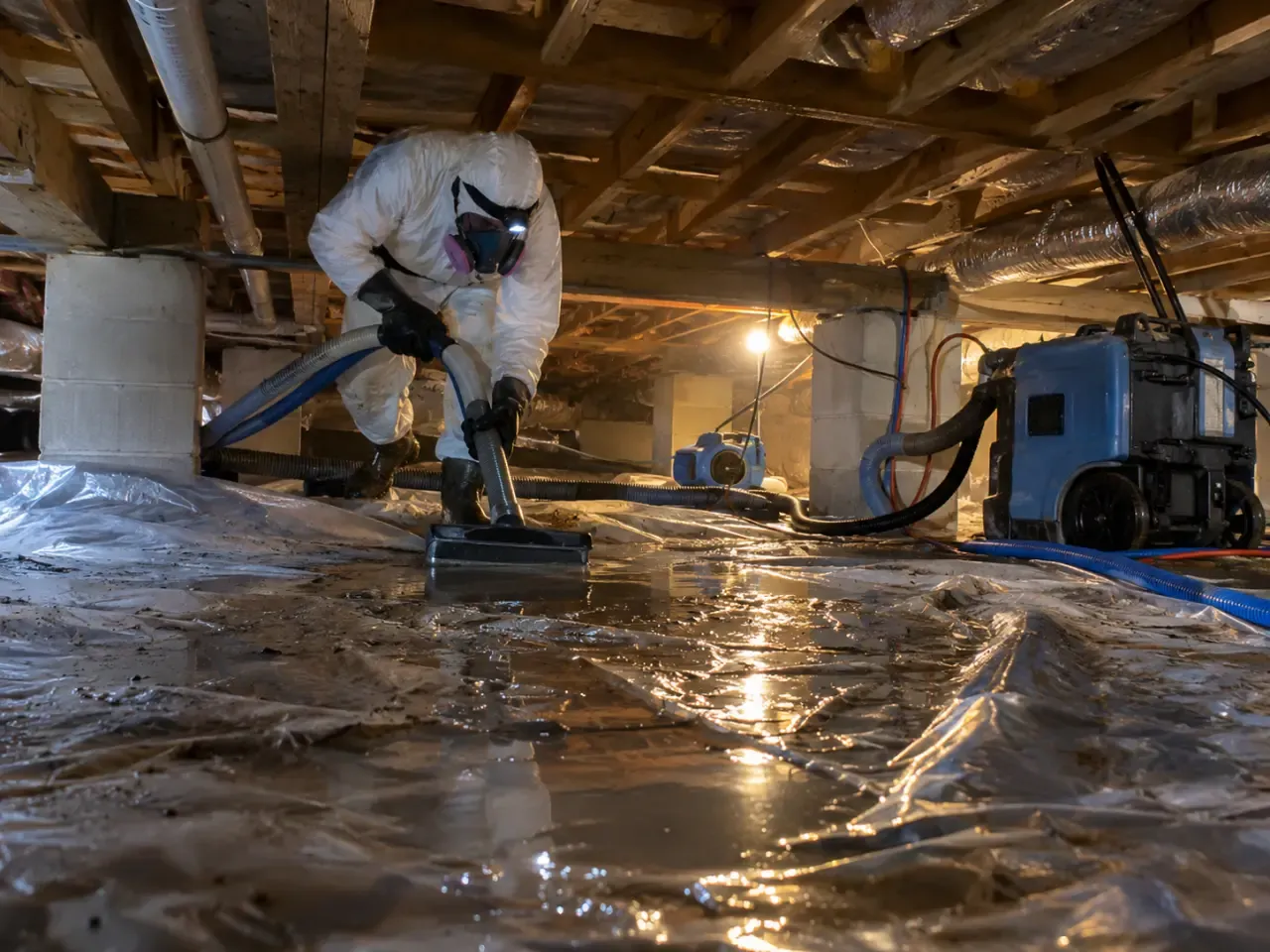
Three days of rain pushed water into a crawlspace through the foundation vents. The vapor barrier was floating, and the floor joists were reading 28 percent moisture content on our meter. The homeowner had not noticed because the house still felt normal. → We pumped 400 gallons, extracted the saturated areas, and dried the joists and subfloor with directed airflow for five days. Joist readings dropped to 12 percent, and the vapor barrier was re-laid and secured.
Sewage Backup in a Midtown Rental
A tenant reported sewage backing up through the basement floor drain after a heavy storm. The affected area covered about 300 square feet, including carpet, baseboards and the bottom 12 inches of drywall. → Our AMRT-certified crew set containment, extracted the water, removed the contaminated carpet and drywall, and disinfected every hard surface. The space passed clearance and was ready for new flooring in six days.
Problems we solve
Water Problems We Solve for Tulsa Homeowners
Most of our calls fall into a handful of categories. If yours is on this list, we have handled it before, probably more than once this year.
Burst pipe behind a wall or under a slab
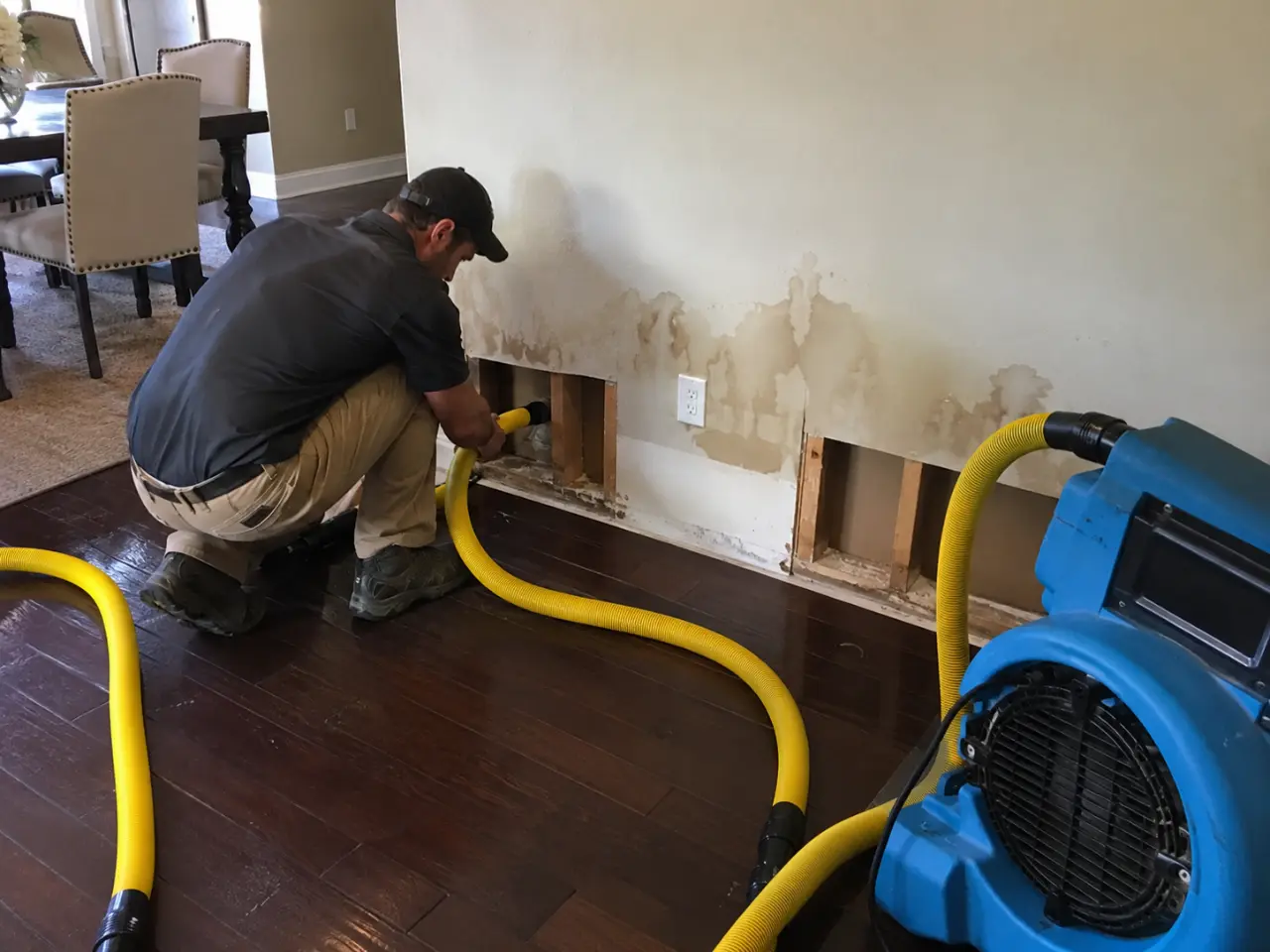
We locate the wet zone with a thermal imaging camera, extract through the affected wall, and dry the cavity with Injectidry Systems panels that force air behind the drywall without tearing it all out. If the drywall is too far gone, we remove and replace it with moisture-resistant drywall.
Sump pump failure during a spring storm
We pump the standing water, extract what soaked into the floor, and dry the space with LGR dehumidifiers. We also check the sump pit and discharge line while we are there, so you know whether the pump needs replacement before the next storm.
Sewage backup in a basement floor drain
Our AMRT-certified technicians set polyethylene containment sheeting, extract the water, remove contaminated material, and disinfect every hard surface. We follow OSHA respiratory protection requirements throughout and document the job for your claim.
Hidden moisture inside walls after a roof leak
We trace the moisture with pin and pinless moisture meters, extract any standing water, and dry the cavity with directed airflow. If insulation is saturated, we remove it, dry the framing, and replace it so the wall can dry from both sides.
Pricing process
What Emergency Water Extraction Costs in Tulsa
$350 - $1,200 for residential extraction, plus $40 - $90 per day per room for drying equipment
Square footage affected
A single room takes far less time and equipment than a whole floor. Extraction is priced partly by area because the truck-mounted unit, hose runs and drying equipment all scale with square footage.
Water category
Clean water from a supply line is the simplest job. Category 2 water from an appliance or washing machine machine needs antimicrobial treatment. Category 3 sewage or floodwater needs containment, PPE and disposal, which adds cost.
How long the water sat
Water that has been sitting for more than 48 hours has usually soaked into subflooring and wall cavities. That means longer drying times and sometimes removal of saturated materials that cannot be saved.
How fast can emergency water extraction reach my home in Tulsa?
Most Tulsa addresses see a crew within 60 to 90 minutes of your call, and we run 24 hours a day. Distance matters less than access, so if your driveway is blocked or the water is near a live panel, tell the dispatcher when you call. We stage equipment at the truck and start extraction within 15 minutes of arrival.
What is the difference between water extraction and water removal?
Extraction is the mechanical process of pulling water out with pumps and extractors; removal is the broader job of getting water out of the structure and disposing of it properly. In practice they are the same call for us. We pump standing water, extract what soaked into carpet and subflooring, then dry the framing so moisture does not stay behind.
Is 24-hour water extraction available in Tulsa OK?
Yes. Our crews run around the clock, every day of the year, including holidays. A 24-hour water extraction Tulsa OK call gets the same equipment and the same documentation as a weekday job. Night calls are common for burst pipes and water heater failures, and we keep trucks staged to cover Tulsa County overnight.
How much does emergency water extraction cost in Tulsa?
Typical 2026 pricing in the Tulsa area runs $350 to $1,200 for residential extraction, with drying equipment adding $40 to $90 per day per room. Square footage, water category and how long the water sat drive the number. Sewage backups and crawlspace jobs cost more because they need containment and antimicrobial treatment.
Related services
Other Services Tulsa Water Shield Provides
Water Damage Cleanup
Extraction gets the water out; cleanup handles what it left behind. We remove saturated carpet padding, treat framing with antimicrobial disinfectant, and replace moisture-resistant drywall where needed. Most Tulsa extraction jobs roll straight into cleanup the same day.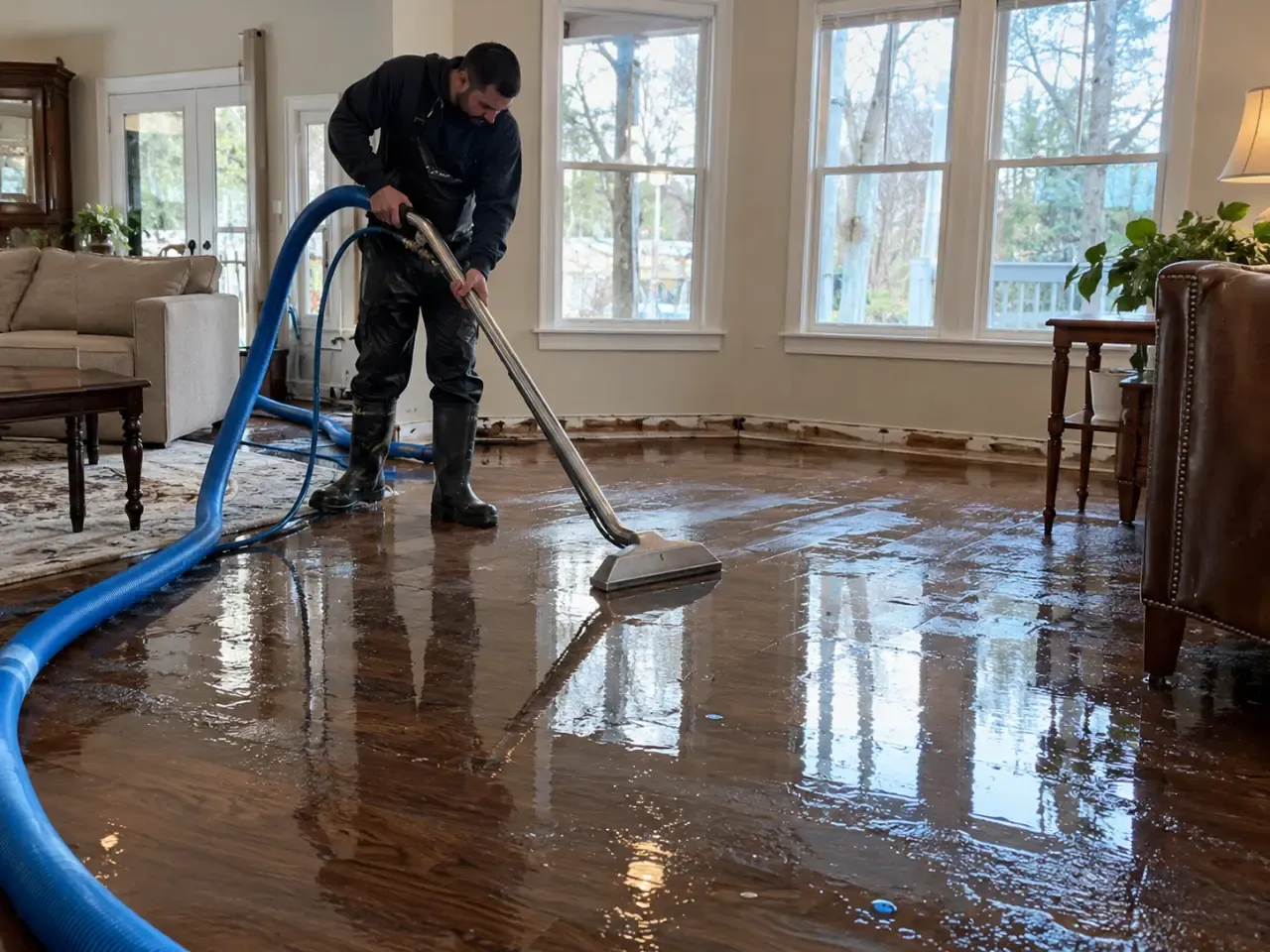
Basement Water Removal
Basements and crawlspaces hold water long after the rest of the house drains. We use submersible pumps and drainage pipe runs to clear them, then dry the space with LGR dehumidifiers. Older Tulsa homes with block foundations get extra attention at the cove joint.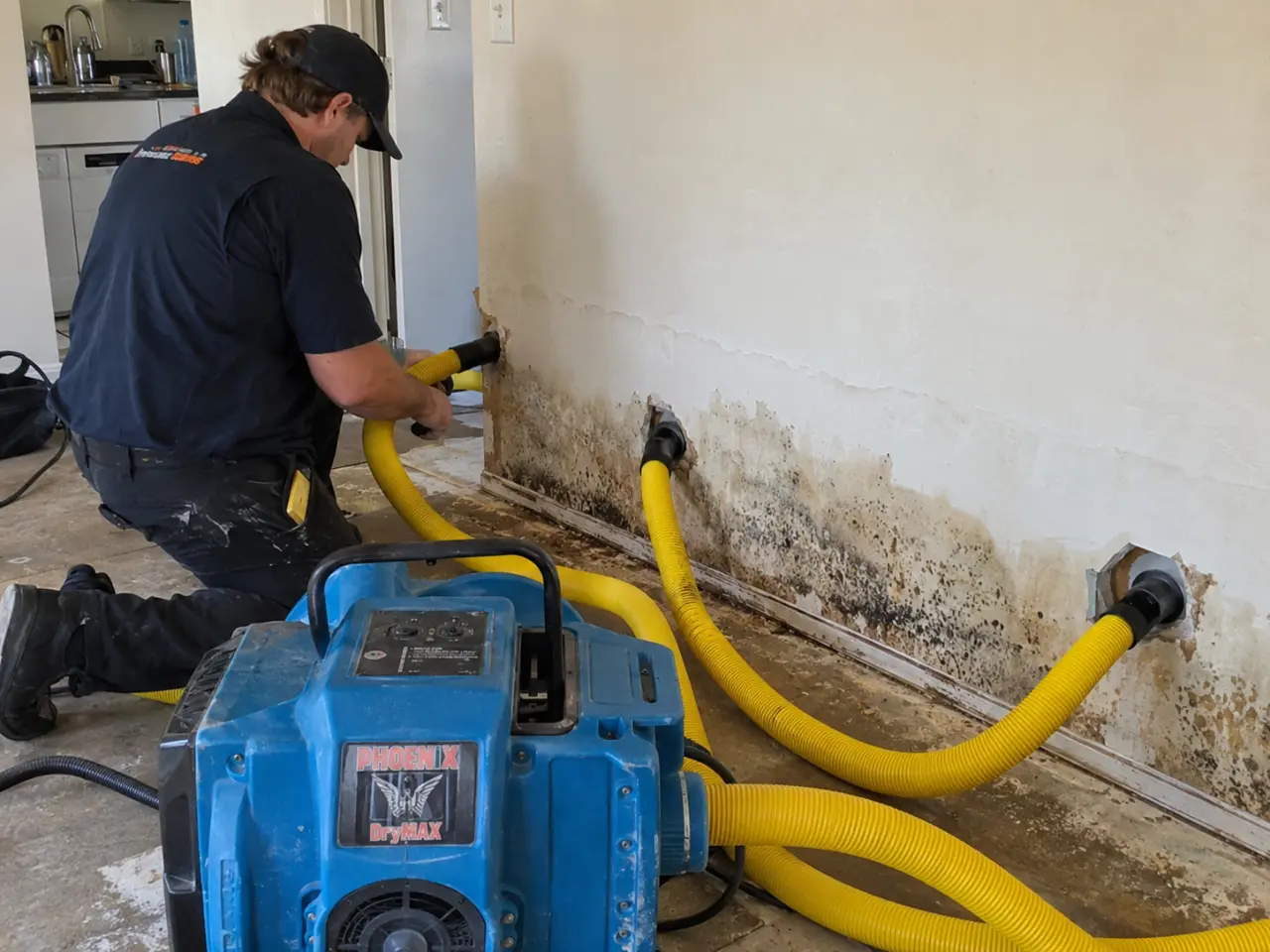
Flood Water Cleanup
Stormwater and sewer overflow carry contaminants that clean-water extraction does not address. Our floodwater extraction company Tulsa Oklahoma crews treat these as category 3 losses, using polyethylene containment sheeting and full PPE before any material is removed from the property.Ready when you are
Call Now for Emergency Water Extraction Tulsa OK
Water spreads fast, and every hour adds cost. Our crews are IICRC Certified and insured, and we answer the phone 24 hours a day. Call (918) 848-9096 and we will tell you exactly when we will be there.
Talk with the local team
Request Emergency Water Extraction
Call (918) 848-9096 any hour of the day or night. We answer live, ask a few questions about the water source, and dispatch a crew. Most Tulsa addresses see a technician within about an hour, and you get a written estimate before any work starts.