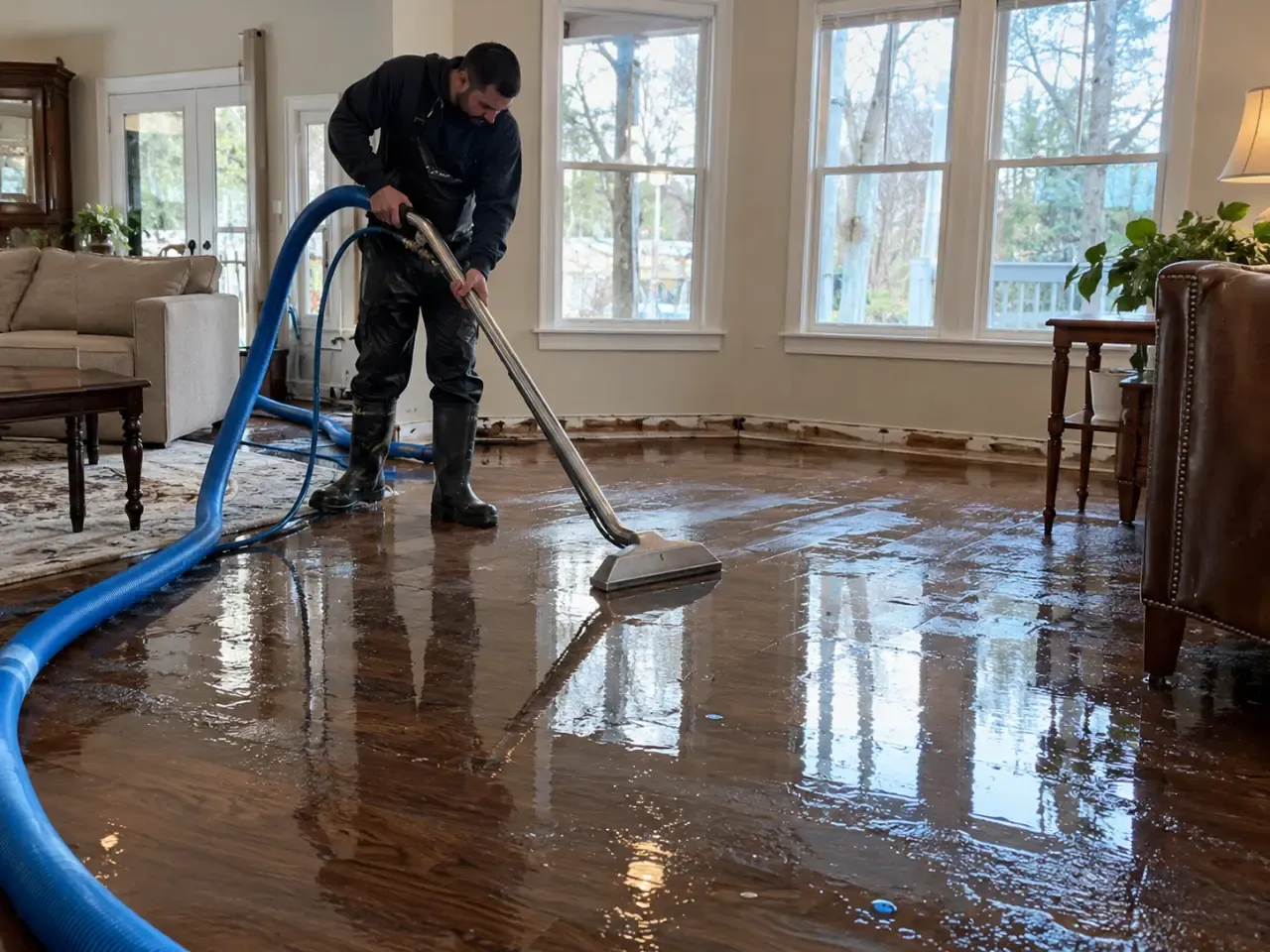
24/7 pumping, extraction, and structural drying across Tulsa County
Basement Water Removal Tulsa OK Done Right the First Time
Basement Water Removal Tulsa OK from Tulsa Water Shield means a truck in your driveway fast, not a voicemail. We pump, extract, and dry flooded basements across Tulsa County, from Brookside bungalows to Southern Hills walk-outs. Whether a sump pump failed at 2 a.m. or stormwater pushed through your foundation after a spring squall, we pull the water, dry the structure, and document everything for your insurance claim.
Live dispatcherUpfront optionsBacked workmanship
What's included
What Basement Water Removal Includes
Every job starts with an on-site assessment and a written scope, so you know what is covered before we start. Standard basement water removal includes pumping, extraction, drying, and documentation. Rebuild work, sump pump replacement, and drainage repairs are quoted separately if you need them.
Emergency Pumping and Extraction
We remove standing water with a submersible pump, then finish with a truck-mounted water extraction unit that pulls water from carpet, padding, and subflooring. Most residential basements are clear of standing water within 2 to 4 hours of arrival.
Moisture Mapping and Documentation
We use a thermal imaging camera and pin and pinless moisture meters to map exactly where the water traveled. Every reading is logged and photographed. This is the documentation your insurance adjuster needs to process the claim without delays.
Structural Drying Setup
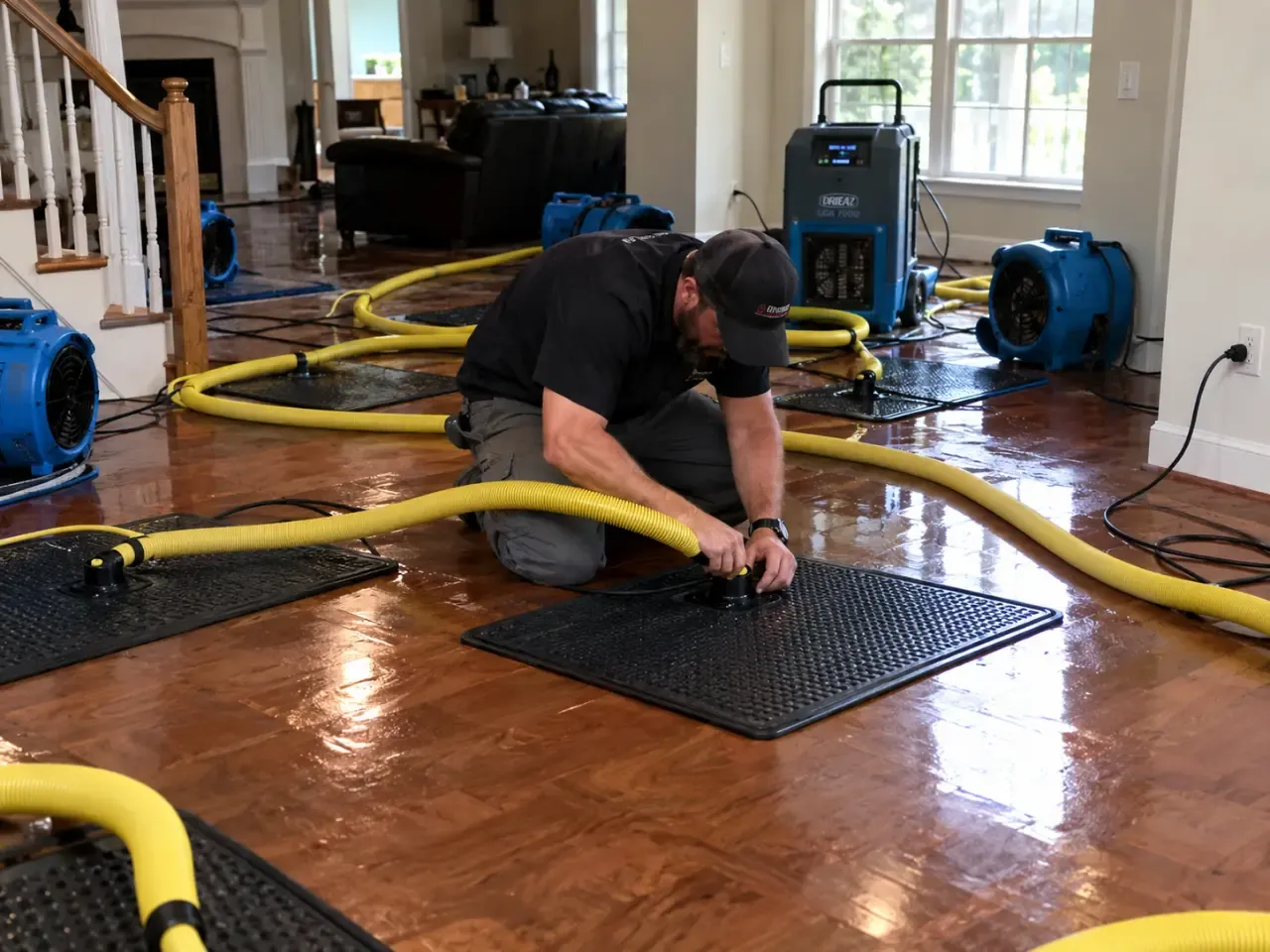
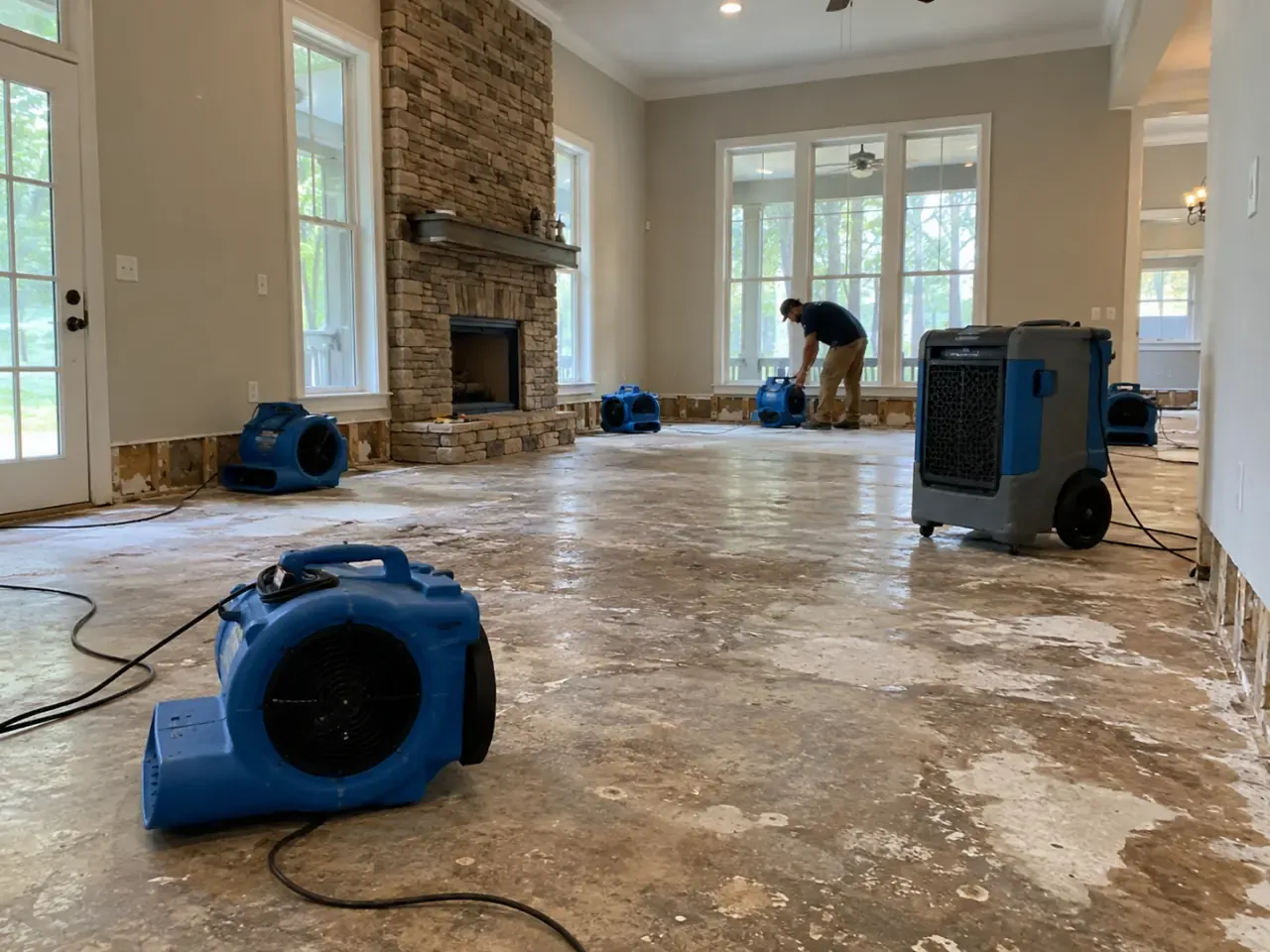
LGR dehumidifiers and air movers are placed based on the cubic footage of your basement. A HEPA air scrubber runs if there is any mold risk. We monitor daily with a hygrometer and infrared thermometer until the space hits dry standard.
Antimicrobial Treatment
After extraction, we apply antimicrobial disinfectant to affected surfaces. This is standard on every job and required on sewage backups and stormwater intrusion. It slows microbial growth while the structure dries.
Insurance Claim Support
We photograph the damage, log extraction volumes, and note the water category so your adjuster has a complete file. We work with most major carriers and can bill them directly on approved claims. You get a copy of everything we send.
Service overview
What Basement Water Removal Tulsa OK Actually Involves
Basement Water Removal Tulsa OK is the process of pumping, extracting, and drying standing water from a below-grade space before moisture wicks into framing, drywall, and flooring. It is not one pass with a wet vac. We start with a submersible pump for deep water, then switch to a truck-mounted water extraction unit to pull water out of carpet padding, subflooring, and concrete pores. A pin and pinless moisture meter and thermal imaging camera tell us where the water actually went, because a dry-looking floor can hide saturated insulation behind it.
Tulsa basements flood for predictable reasons. Sump pump failure during a May downpour, a water heater letting go in a Florence Park rental, or stormwater intrusion through a cracked footing after the ground sat saturated for a week. We have run basement water extraction in Tulsa OK since 2020, and the calls cluster from March through June, then again after the first hard freeze cracks a supply line. If you are searching for 24/7 basement water removal near me in Tulsa, the answer is a live dispatcher, not a call center three states away.
How we workWe verify the cause, compare realistic options, and confirm the repair before we leave.
The service timeline
Our Basement Water Removal Process
The process flexes to the condition, but these checkpoints keep decisions clear.
Emergency Call
You call (918) 848-9096 and reach a live person, day or night. We ask three questions: how deep is the water, is it clean or sewage, and is the power still on. That tells us what to load on the truck. We give you an arrival window and a straight answer on what to do while you wait.
Inspection and Shutoff
First tech on-site locates the source and shuts it down if it is still flowing. We check the sump pump, the water heater, and the supply lines, then map the moisture with a thermal imaging camera. You get a clear explanation of what we found before any equipment comes off the truck.
Pumping and Extraction
Deep water comes out with a submersible pump. Once we are down to a film, a truck-mounted water extraction unit takes over and pulls water from carpet, padding, and subflooring. Typical residential basements are clear of standing water in 2 to 4 hours.
Drying and Monitoring
We set LGR dehumidifiers and air movers based on the square footage and ceiling height of the space. A HEPA air scrubber runs if there is any mold risk. We return daily to log moisture readings with a Protimeter or Tramex meter until the basement hits dry standard, usually 3 to 5 days.
Final Walkthrough
We pull the equipment, take final moisture readings, and walk the basement with you. You get the documentation package for your insurer and a plain-language rundown of what to watch for. If a sump pump or drainage issue caused the flood, we tell you what to fix so it does not happen again.
Tools & methods
Tools and Methods We Use
Purpose-built equipment, used by trained technicians, so the job is done accurately the first time.
Truck-mounted water extraction unit
Pulls water out of carpet, padding, and subflooring after the bulk water is pumped. Far more powerful than a portable unit and faster on larger basements.
Submersible pump
Removes deep standing water quickly so extraction equipment can reach the floor. Essential when a basement has several inches or more of water.
LGR dehumidifier
Pulls moisture out of the air and, by extension, out of framing, drywall, and subflooring. Sized to the cubic footage of your basement for efficient drying.
Air mover
Circulates air across wet surfaces to speed evaporation. Placed based on the layout of the space, not just scattered around the room.
Thermal imaging camera
Reveals hidden moisture behind walls and under floors that a moisture meter alone would miss. Critical for finding water that traveled away from the visible puddle.
Pin and pinless moisture meter
Measures moisture content in wood, drywall, and concrete. We log readings daily to confirm the structure is drying and to know when it has hit dry standard.
HEPA air scrubber
Filters airborne particles and mold spores during drying. We run one whenever there is a mold risk or when contaminated water was involved.
Use cases
When to Call for Basement Water Removal
These examples show how the service framework adapts rather than forcing every call through one repair.
Stormwater Intrusion in Maple Ridge
Three inches of spring rain pushed water through a foundation crack into a finished Maple Ridge basement. The carpet was soaked and the musty smell started within a day. The homeowner was worried about mold behind the finished wall. → We extracted the water, opened the wall cavity to inspect the insulation, and found early mold growth on the paper facing. We removed the affected insulation, treated the framing with antimicrobial disinfectant, and dried the cavity. The basement was dry in five days.
Sewage Backup in a Midtown Rental
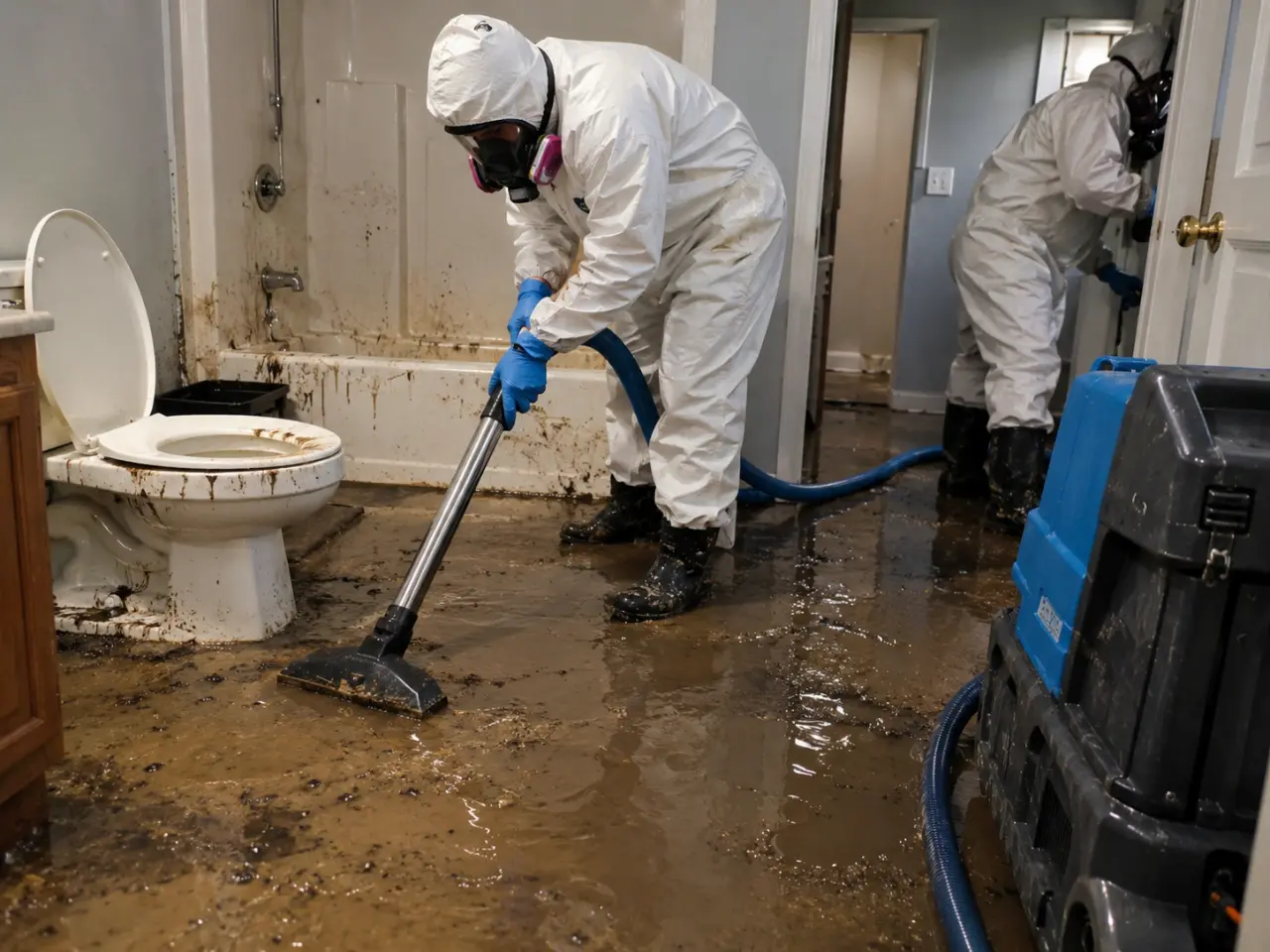
A floor drain backed up during a heavy storm and sent sewage across a Midtown rental basement floor. The tenant called the property manager, who called us. Contaminated water had reached the bottom of a storage rack and a section of carpet. → We contained the area with polyethylene sheeting, removed the contaminated carpet and affected drywall, and disinfected all hard surfaces with antimicrobial products. The structure was dried and verified clean in four days. The tenant was back to normal use of the space the following week.
Problems we solve
Basement Water Problems We Solve in Tulsa
Most Tulsa basement floods trace back to one of a handful of causes. Identifying the cause matters as much as removing the water, because the same failure will flood you again next season if nobody fixes it.
Sump pump failure during a heavy storm
We pump and extract the water, dry the structure, and inspect the sump pit and discharge line. If the pump is undersized or the check valve failed, we tell you what to replace so the next storm does not flood you again.
Stormwater intrusion through foundation cracks
We extract the water, dry the concrete and framing, and treat affected areas with antimicrobial disinfectant. We also identify the entry points and recommend drainage pipe or grading fixes to keep stormwater away from the foundation.
Sewage backup through a floor drain
We contain the area with polyethylene containment sheeting, remove contaminated materials, disinfect with antimicrobial products, and dry the structure. Our techs follow OSHA respiratory protection requirements and handle disposal properly.
Hidden moisture inside walls and floors
We use a thermal imaging camera and pin and pinless moisture meters to find moisture you cannot see. Drying equipment is placed to address those hidden areas, and we monitor daily until readings confirm the structure is dry.
Pricing process
What Basement Water Removal Costs
$500 - $2,500 for most residential jobs
Water depth and volume
A two-inch puddle is a different job than a foot of standing water. Deeper water takes longer to pump and usually means more materials are saturated by the time we arrive.
Square footage affected
Drying equipment is sized to the cubic footage of the space. A 400-square-foot basement needs fewer dehumidifiers and air movers than a 1,200-square-foot finished space.
Water category
Clean supply-line water is the simplest job. Stormwater and sewage backups are contaminated, which means containment, antimicrobial treatment, and removal of porous materials that cannot be saved.
Who removes water from flooded basements in Tulsa?
Tulsa Water Shield removes water from flooded basements across Tulsa County, and we have done it since 2020. We handle clean supply-line leaks, stormwater intrusion, and sewage backups. Call (918) 848-9096 and a live dispatcher will get a crew moving. Most residential basements are pumped and extracted within 2 to 4 hours of arrival, and we document everything for your insurance claim.
How much does basement water removal cost in Tulsa OK?
Most residential basement water removal jobs in Tulsa run $500 to $2,500 in 2026, depending on water depth, square footage, and whether the water is contaminated. A small clean-water pump-out sits at the low end. Sewage backups and larger finished basements with wet drywall and insulation push toward the top. We give you a written scope before we start, and we bill most insurance carriers directly.
How quickly should basement water extraction start?
Extraction should start within 24 hours of the flooding, and sooner is better. Mold can begin colonizing wet organic materials in 24 to 48 hours, and wood framing starts to swell within days. If you are searching for a basement water extraction company Tulsa OK open now, call us. We dispatch 24/7 and typically have a crew on-site within 60 to 90 minutes inside the Tulsa city limits.
Can basement flooding cause mold or structural damage?
Yes. Standing water left more than 48 hours commonly produces secondary mold growth, and prolonged moisture rots subflooring, warps framing, and damages insulation. We dry to the ANSI/IICRC S500 standard and monitor with calibrated meters until the structure hits dry standard, usually 3 to 5 days. If mold is already present, we handle it under the ANSI/IICRC S520 standard rather than painting over it.
Related services
Related Services
Emergency Water Extraction
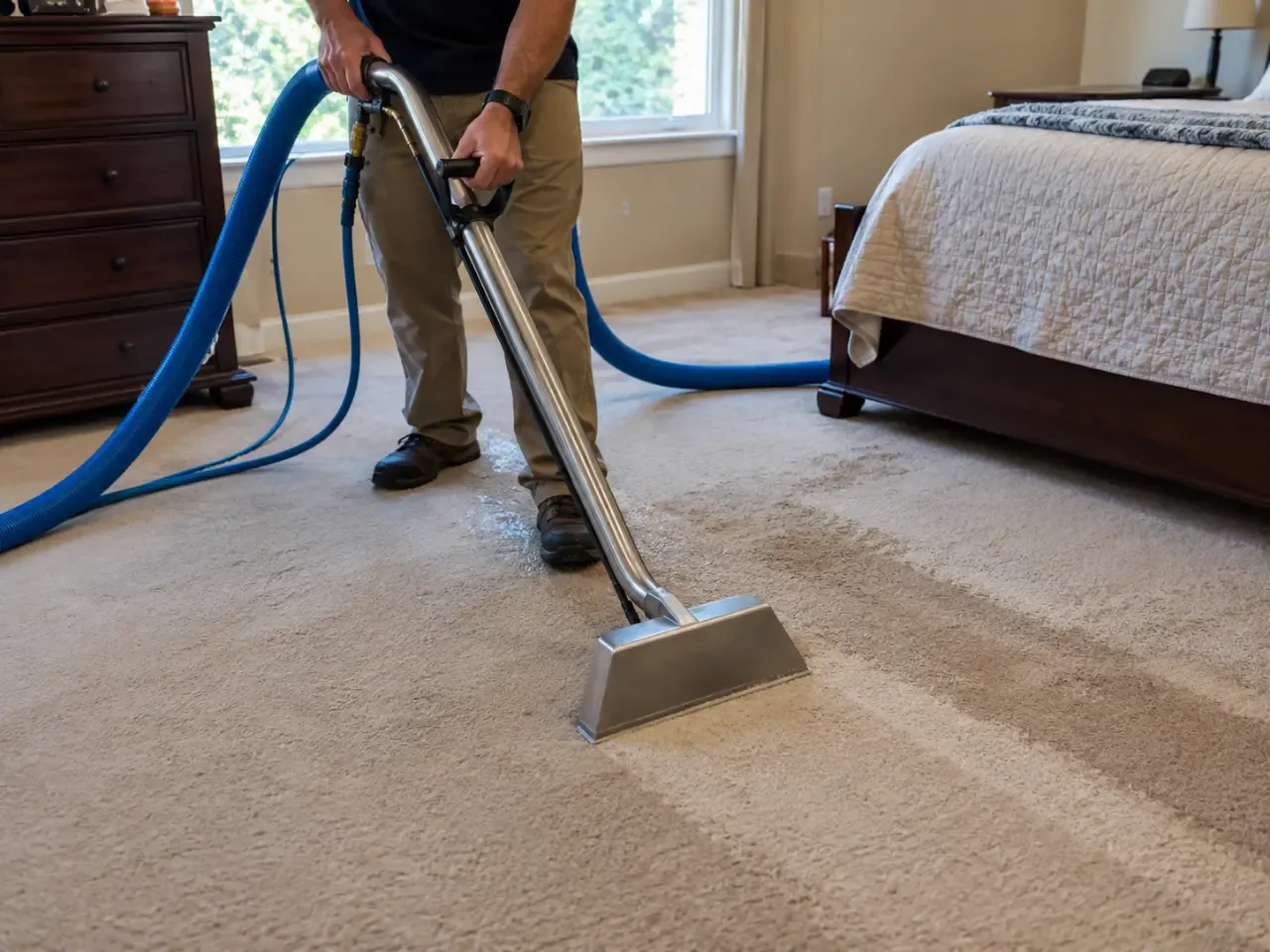
When a pipe bursts or an appliance fails, emergency water extraction is the first step before basement water removal can begin. We pull the bulk water fast, then transition into full extraction and drying. Available 24/7 across Tulsa County.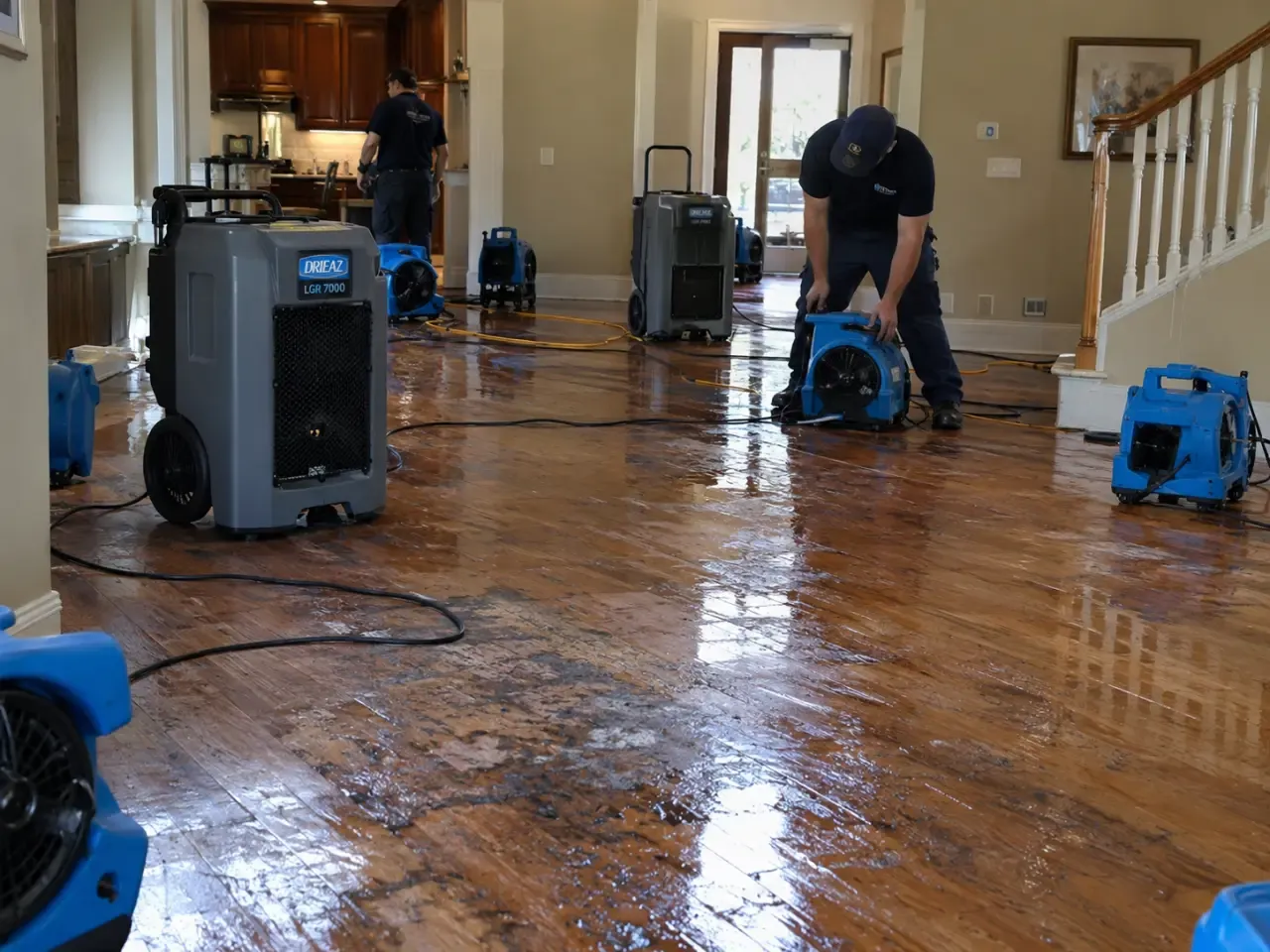
Water Damage Cleanup
After the water is out of your basement, water damage cleanup covers the removal of ruined materials, antimicrobial treatment, and the drying that prevents mold. It is the natural next phase of any basement water removal job in Tulsa.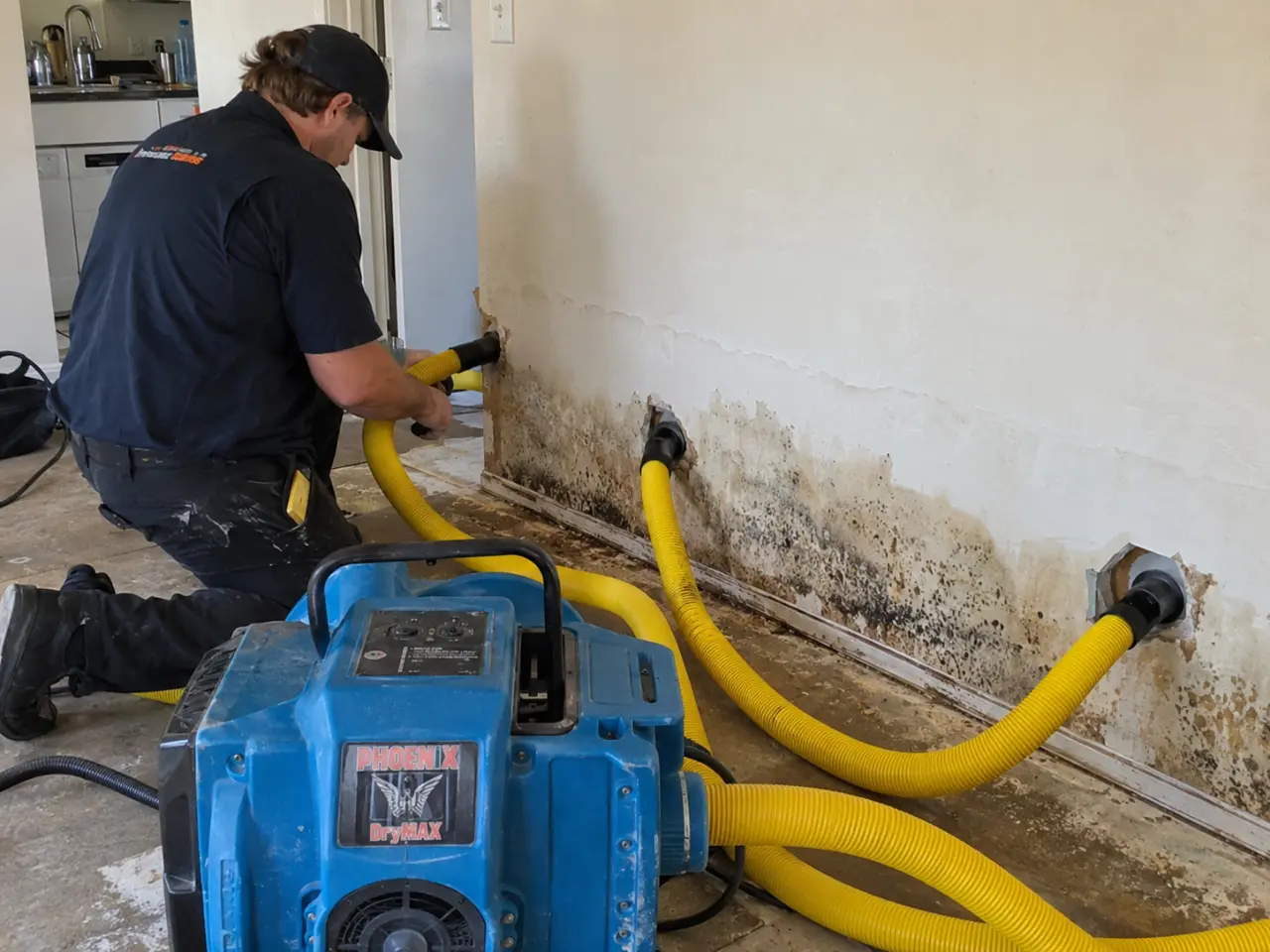
Flood Water Cleanup
Stormwater and surface flooding carry contaminants that a clean supply-line leak does not. Flood water cleanup in Tulsa includes containment, antimicrobial disinfectant, and safe disposal of contaminated porous materials before we dry the space.Ready when you are
Need Basement Water Removal Tulsa OK Right Now?
Every hour the water sits, the damage gets more expensive. We are IICRC-certified, insured, and dispatch 24/7 across Tulsa County. Call now and we will give you an arrival window and a straight answer on what to do while you wait.
Talk with the local team
Request Basement Water Removal
Call (918) 848-9096 any hour of the day or night. We answer live, ask a few questions about the water source, and dispatch a crew. Most Tulsa addresses see a technician within about an hour, and you get a written estimate before any work starts.